 EN
EN

Green is easy | Solidarity for fashion
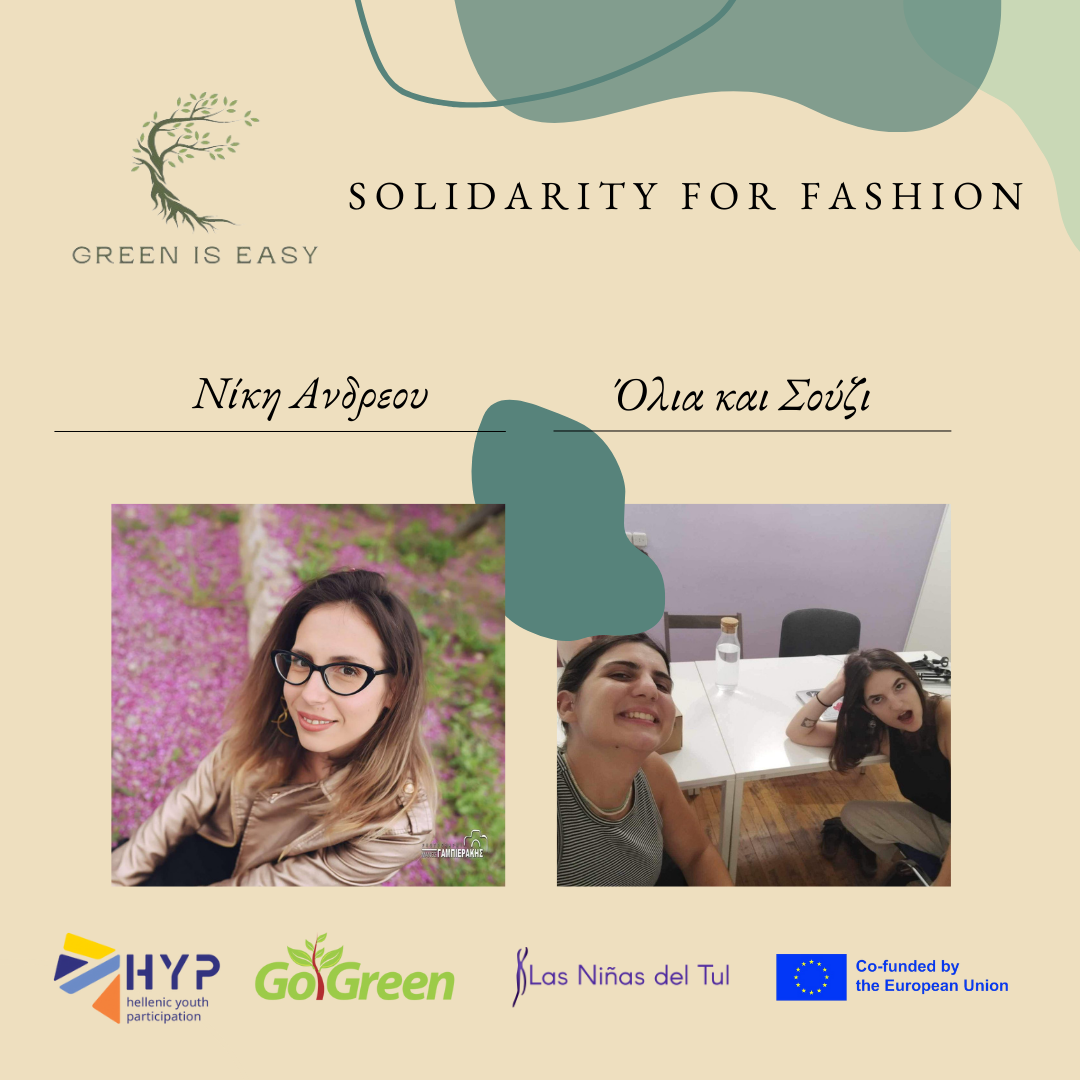
How can sustainability meet fashion? This is a tricky question that many people face when either following the urge to buy new clothes to be fashionable or trying to refrain from it for sustainable reasons. While social media and clothing brands are feeding us with the latest trends and must-haves in our wardrobes, it’s hard to resist falling into the fast-fashion trap of overconsumption. The volunteer group Solidarity for Fashion was founded on the idea of opposing this mindset – by giving clothes a new life through swap parties.
In the third episode of Green is Easy we get to meet Niki Andreou who volunteers at Solidarity for Fashion – a group promoting ethical, slow, and sustainable fashion, which operates as part of Hellenic Youth Participation. Intending to minimize overconsumption and show great sustainable alternatives to fast fashion, the group regularly organizes activities that promote green practices concerning clothes. This is needed because the fashion industry, as it currently is operating, is far from sustainable. The production of clothes requires a huge amount of resources, such as water and cotton, which demand pesticides to grow. When dyeing textiles, heavy metals and other toxicants are released, harming water sources, animals, and humans in the production areas. Then, the products are typically shipped across the globe, leading to high CO2 emissions, only to be worn a couple of times before being thrown away. Apart from that, the human work included in many fast fashion brands is unethical, with low salaries and poor working conditions. For this reason, Solidarity for Fashion is not only working to create a sustainable consumption trend that opposes the mindset of fast fashion but also striving to raise awareness of the industry’s unethical aspects. For instance, they organize workshops where people learn how to up-cycle their clothes, as well as bazaars with stores selling second-hand clothes and small businesses that mainly use ecological and recyclable materials. Their most successful events, however, are their swap parties, where people bring old clothes they don’t use anymore and find pieces that others have brought. The mindset behind these practices is not only greener but also economically more sustainable. Some think that buying cheap clothes in a fast fashion store is economically beneficial due to the low prices, but truth be told, the short life cycle of the clothes makes buying new clothes a consumption habit that does not benefit the wallet either. So what’s even better than going to your local thrift store? Going to a clothes swap event!
Green is easy was co-funded by the European Union and the Greek National Agency "Youth and Lifelong Learning Foundation"
Funded by the European Union. Views and opinions expressed are however those of the author(s) only and do not necessarily reflect those of the European Union or the European Education and Culture Executive Agency (EACEA). Neither the European Union nor EACEA can be held responsible for them.
--> Find the podcast here.
--> Find the script here.
Share